


- 3 mins
HazingInfo information architect Lana Burke makes campus hazing details easier to find and understand for students and families
A lot of hazing information is buried on many college websites — if you know where to look.
Lana Burke, HazingInfo’s information architect, has been pivotal in our work to track down and structure hard-to-locate hazing information so we can share it with students and families.
Lana’s background in information science and her passion for making information transparent and usable have helped us develop new ways to collect, evaluate, organize, and share what schools publish about hazing, giving consumers a deeper look at how seriously their college or university takes hazing prevention.
Lana joined HazingInfo in 2025 through a Capstone project for her Master of Library and Information Science (MLIS) at the University of Washington Information School.
What began as a graduate project grew into a consulting role, where she designed the data behind HazingInfo’s state-by-state statistics page and built review tools our team can use to analyze data. Those tools make gathering and checking hazing transparency information faster and more consistent across the nearly 1,500 campuses we track.
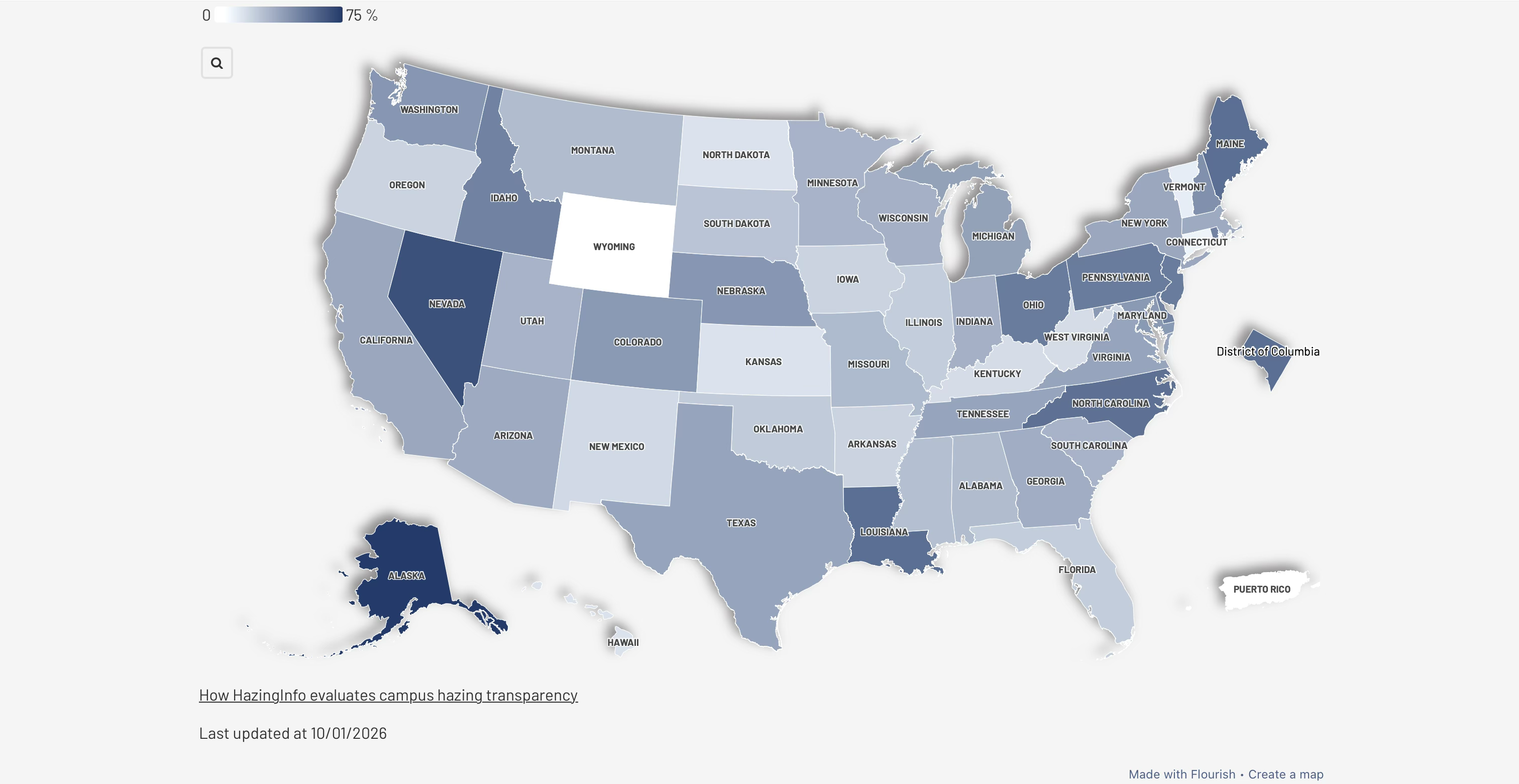
An interactive map, built by Lana, showcasing hazing transparency across the U.S.
What transparency is all about
“I didn't realize how hard it can be to find hazing information on college websites,” Lana said. “Hazing policies and reports are often hidden away in a corner of the site, which means a parent or student trying to make an informed decision about joining a campus group might never find them.”
Instead of requiring families to piece together information from different corners of the internet, HazingInfo brings it all together in our Campus Hazing Database tool, where students and families can easily search their college or university to learn about hazing incidents, policies, and how to report hazing.
“Now I think of true transparency as not just making information available, but making it findable as well,” Lana said.
That idea shapes her work behind the scenes. This year, Lana has designed improvements to how HazingInfo’s information is structured and connected, from creating automated summaries for each campus profile page to linking our hazing deaths records to their associated campuses, making the site easier to navigate and the information easier to use.
While finding information is one challenge, helping students and families understand what story the data tells is another.
“When data and research are well presented and organized, they paint a clear picture that can help turn knowledge into action,” Lana said.
Coming soon: Even more college hazing data
Lana’s work with HazingInfo isn’t finished yet.
Her next projects include creating a system to gather hazing statistics from colleges’ Annual Security Reports (ASRs). It’s a new set of numbers required by the federal government starting this month to capture how many hazing reports are made each year to campus authorities and local police, covering both on- and off-campus incidents. Together with HazingInfo’s other information, this will give us a fuller picture of the extent of college hazing and where it is happening.
Lana is also working with student assistant Beliz Ozhan and intern Mahir Rana on a new system that uses automation to convert reported hazing incidents into consistent, structured records, far faster than collecting them by hand. With a person reviewing each incident for accuracy, the result will be reliable information that can reveal trends and patterns in college hazing across the U.S.
“Lana is a creative problem-solver with an intuitive understanding of how to present information so that it can empower students and families with the facts about hazing,” said Jolayne Houtz, HazingInfo’s founder. “Her work is shining a light on hazing practices that have existed in the shadows for generations and helping to create safer campuses.”