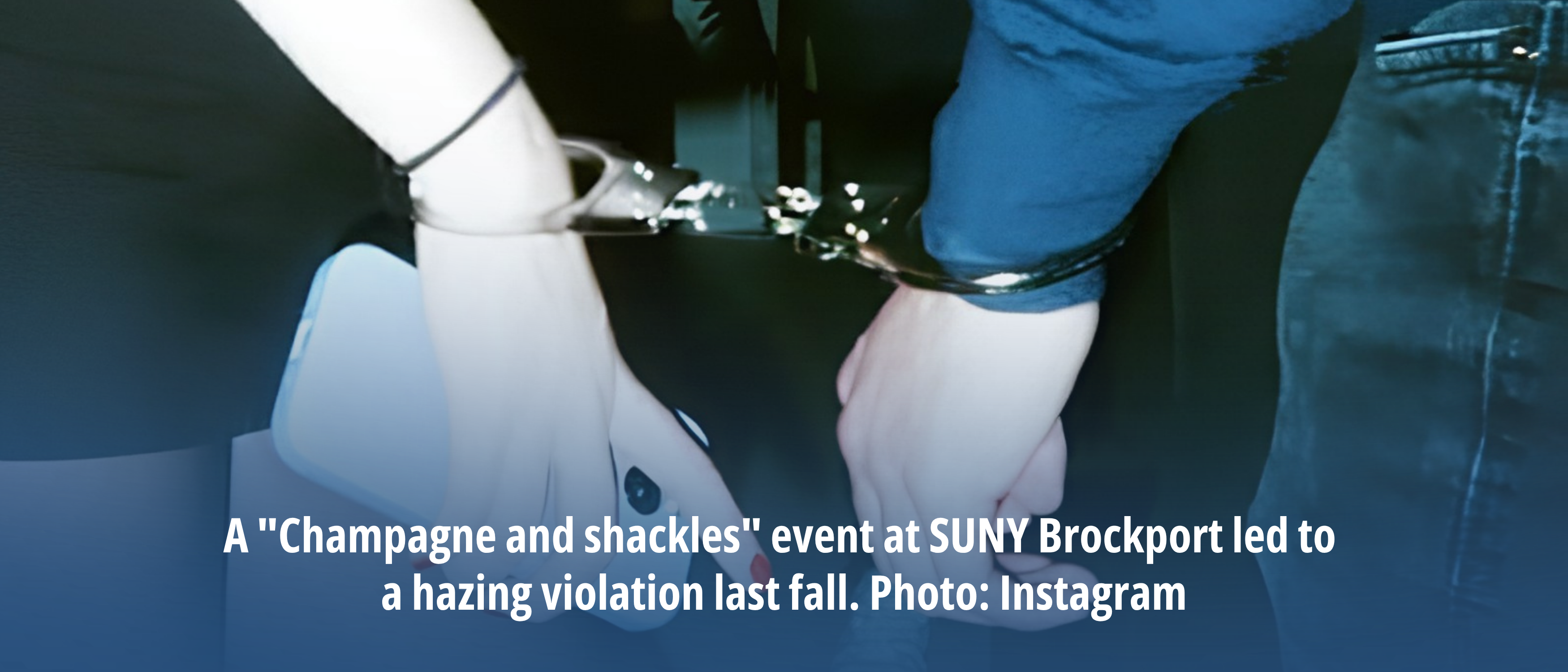
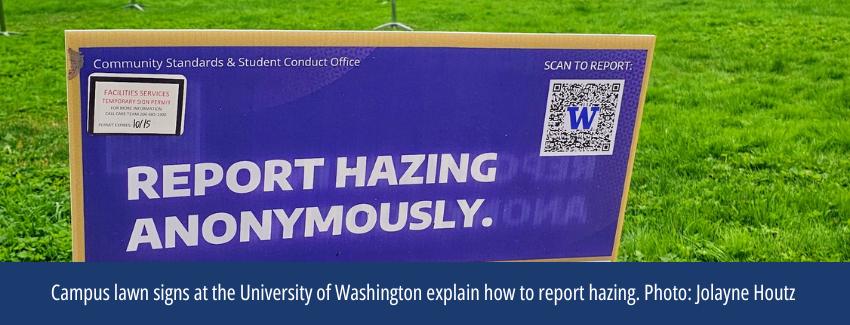

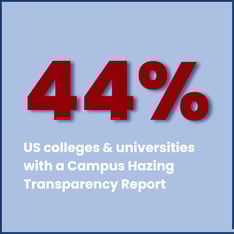
Just 44% of colleges and universities are disclosing hazing incidents as required by federal law, according to HazingInfo
More than 800 US colleges and universities missed last month’s deadline to post their hazing incidents online and are now out of compliance with the federal Stop Campus Hazing Act.
Schools that have not published the required Campus Hazing Transparency Report include larger universities like Harvard University, University of Alabama at Birmingham, University of Memphis, University of New Mexico, and University of Texas at Dallas.
 Many more small and mid-sized colleges across the nation also missed the deadline.
A deep dive by HazingInfo.org into new hazing data for nearly 1,500 colleges and universities revealed 56% of campuses have not posted their Campus Hazing Transparency Report.
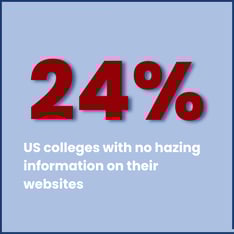
Nearly one-quarter of schools provide no hazing information of any kind on their websites — no hazing policy, incident report, or way to report hazing.
“Many campuses are falling short of the spirit of the law,” said Dr. Elizabeth Allan, a leading hazing researcher and director of the Hazing Prevention Research Lab at the University of Maine.
“The concerning part is how many campuses still seem to be treating hazing as something to manage quietly, rather than confront openly,” Allan said.
Most campuses have hazing policies, but few make it easy to report hazing
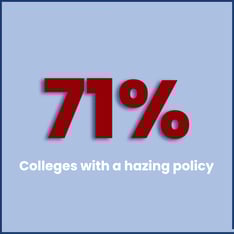 Most campuses are doing a somewhat better job with another requirement of the federal law: 71% of campuses now have a formal hazing policy as required.
Schools also must provide a way for students and others to report a hazing incident. HazingInfo found just 42% of schools provide an online form to report hazing.
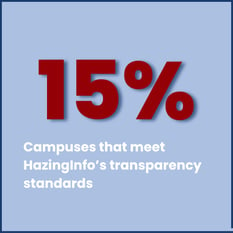
Overall, only 15% of US colleges and universities meet HazingInfo’s transparency standards by providing five key pieces of information: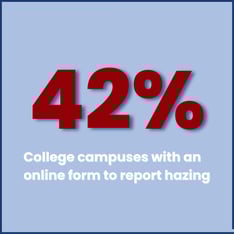
- A hazing policy
- A record of hazing incidents
- An online form for reporting hazing
- A hazing hotline phone number
- A campus email contact for hazing
Learn how HazingInfo evaluates hazing transparency for every campus.
The new data suggest that hazing prevention efforts are fragmented on many campuses, said Allan, who is also founder and principal of the research organization StopHazing.org.
"Hazing prevention is not yet integrated into a coordinated, comprehensive harm prevention strategy," she said.
HazingInfo has all-new national data on hazing transparency
Last week, HazingInfo updated our hazing database with all-new information for nearly 1,500 college campuses based on their latest published information.
Our data-gathering team spent four weeks collecting and fact-checking each school’s hazing transparency information. HazingInfo is the only place to find all of the data in one place.
New law aims to bring hazing to light
 Information about campus hazing incidents is often kept under wraps by colleges, universities, and national student organizations such as fraternities.
That leaves students and families in the dark about which groups, teams, and organizations pose a safety risk.
The Stop Campus Hazing Act, signed into law in 2024, is the first nationwide anti-hazing law. For the first time, all higher education institutions are required to publicly disclose hazing incidents and provide information on their efforts to prevent hazing.
Each campus had until December 23, 2025, to publicly share which student organizations have violated its hazing policy. Schools were required to start collecting that data on July 1, 2025.
How campuses are responding to new hazing requirements
 HazingInfo found examples of colleges and universities both large and small that are prioritizing hazing transparency and are in full compliance with the Stop Campus Hazing Act.
Large universities in each state are generally in compliance with the law. That includes Johns Hopkins University, Oklahoma State University, Purdue University, University of Central Florida, University of Colorado-Boulder, University of Michigan, University of Oregon, and University of Washington.
HazingInfo found 80% of the largest colleges and universities in each state now publish hazing incidents on their websites, many for the first time.
Small schools lag behind their larger peers
Smaller schools — with fewer resources and staff — are generally less likely to be in compliance with the law, HazingInfo found. But there are notable exceptions.
Chowan University in North Carolina, a Christian school with 675 students, is fully responding to the new transparency requirements with a hazing incident record, a robust hazing policy and prevention page, and three different ways to report a hazing incident. That includes a dedicated hazing@chowan.edu email address.
Similarly, Bethany Lutheran College in Minnesota, with 899 students, has a fully developed hazing prevention website that provides all required hazing transparency information.
Neither school had any reported hazing incidents.